Turkish
 English
 Deutsch
 Русский
 عربى
عربى
Menü
Contact information
- Mimar Sinan Mahallesi 1359. Sokak Akademia Sağlık Merkezi No: 5 K:2 D:4 Alsancak, Konak
- info@safasatoglu.com
- Working hours: 09.00 - 18.00 Sunday: Closed
Can Spinal Stenosis Progress? Symptoms, Progression, and When Treatment Is Needed
Can Spinal Stenosis Progress? Symptoms, Progression, and When Treatment Is Needed
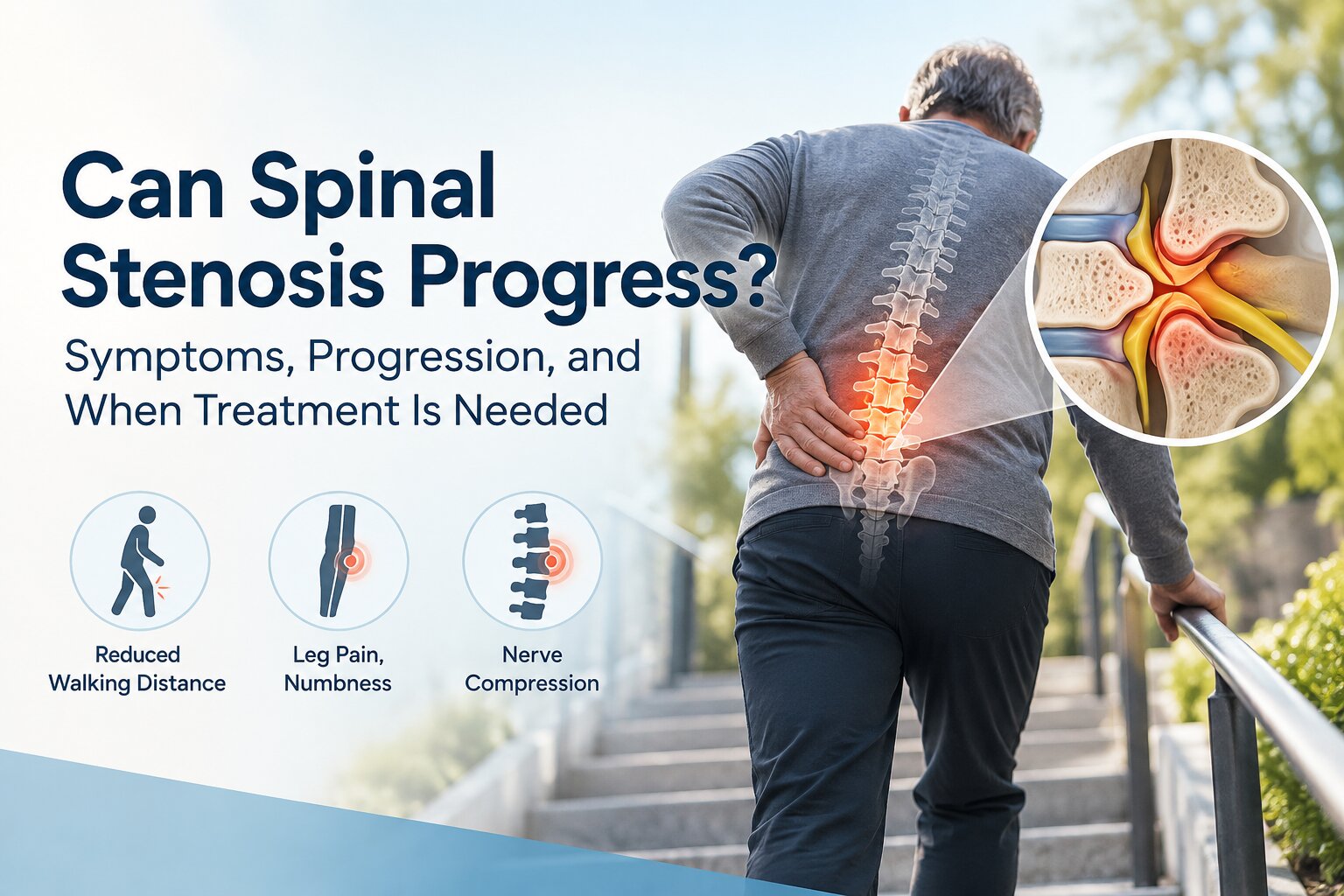
Spinal stenosis is a condition that occurs when the space within the spinal canal becomes narrowed, potentially placing pressure on the spinal cord or nerve roots. In some people, spinal stenosis may remain relatively stable for a long period, while in others it may gradually progress and cause increased nerve compression. As the condition advances, symptoms such as reduced walking distance, leg pain, numbness, tingling, or weakness may become more noticeable.
Can Spinal Stenosis Get Worse Over Time?
The progression of spinal stenosis is not the same for every patient. Age-related degenerative changes in the spine may gradually contribute to further narrowing of the spinal canal. Changes in the intervertebral discs, arthritis of the spinal joints, thickening of the ligaments, and the development of bone spurs may all reduce the available space around the nerves.
However, the presence of narrowing on imaging does not necessarily mean that symptoms will rapidly worsen. Some people may have mild symptoms for years. For this reason, symptoms, neurological findings, and changes in daily activities should be evaluated together.
How Can You Tell If Spinal Stenosis Is Progressing?
Progression is often noticed through changes in symptoms and functional capacity. One of the most important signs may be a gradual reduction in walking tolerance.
Possible signs of progression may include:
- Reduced walking distance
- Increasing leg pain
- More frequent numbness or tingling
- Difficulty standing for long periods
- Increasing weakness in the legs
- Greater difficulty performing daily activities
If these symptoms become more frequent or severe, medical evaluation may be necessary.
Why Can Walking Distance Decrease?
In lumbar spinal stenosis, pressure on the nerves may become more noticeable while standing or walking. As a result, a person may experience pain, numbness, burning, heaviness, or weakness in the legs after walking a certain distance.
Some patients may notice that sitting down or leaning slightly forward reduces their symptoms. A progressive decrease in walking distance may indicate that spinal stenosis is having a greater impact on everyday mobility.
When Does Spinal Stenosis Require Treatment?
Treatment for spinal stenosis is not the same for every patient. The decision to begin or change treatment depends on factors such as symptom severity, neurological findings, walking capacity, and the extent to which daily life is affected.
For patients with mild symptoms, regular follow-up, physical therapy, exercise programs, lifestyle adjustments, and medications may be considered. If symptoms continue to worsen, the treatment plan may need to be reassessed.
Non-Surgical Treatment Options
In mild or moderate cases, non-surgical treatment methods may be used to help reduce symptoms and support mobility. These approaches may include:
- Physical therapy
- Personalized exercise programs
- Pain-relieving or anti-inflammatory medications prescribed when appropriate
- Activity modification
- Ergonomic adjustments
- Weight management when relevant
In selected patients, injection treatments may also be considered after specialist evaluation.
When Is Surgery Considered for Spinal Stenosis?
Surgical treatment may be considered when symptoms become severe, nerve compression is significant, or non-surgical treatments do not provide sufficient relief.
Surgery may also be discussed when:
- Walking distance becomes severely limited
- Pain significantly affects daily activities
- Progressive muscle weakness develops
- Neurological symptoms worsen
- Conservative treatments fail to provide adequate improvement
The main goal of surgery is generally to reduce pressure on the nerves and create more space within the spinal canal.
Which Symptoms Require More Urgent Evaluation?
Certain neurological symptoms may require more prompt medical assessment. These may include progressive weakness in the legs, marked difficulty walking, or rapidly worsening neurological symptoms.
New problems with bladder or bowel control, numbness in the groin or saddle area, or sudden significant weakness should be evaluated urgently.
Why Is Regular Follow-Up Important?
Because spinal stenosis may progress differently from one patient to another, regular follow-up can be important. During follow-up visits, walking capacity, pain severity, muscle strength, sensation, reflexes, and neurological findings may be assessed.
When necessary, imaging studies such as MRI may be used to evaluate changes in the spinal canal and surrounding structures. This helps determine whether the current treatment plan should be continued or modified.
Spinal stenosis does not progress at the same rate in every patient. Some people may continue to have mild symptoms for a long period, while others may experience increasing nerve compression, reduced walking capacity, and more pronounced leg symptoms. For this reason, medical evaluation is important when symptoms worsen or begin to interfere more significantly with daily life.