Turkish
 English
 Deutsch
 Русский
 عربى
عربى
Menü
Contact information
- Mimar Sinan Mahallesi 1359. Sokak Akademia Sağlık Merkezi No: 5 K:2 D:4 Alsancak, Konak
- info@safasatoglu.com
- Working hours: 09.00 - 18.00 Sunday: Closed
Can a Herniated Disc Recur? Causes, Symptoms and Treatment of Recurrent Lumbar Disc Herniation
Can a Herniated Disc Recur? Causes, Symptoms and Treatment of Recurrent Lumbar Disc Herniation
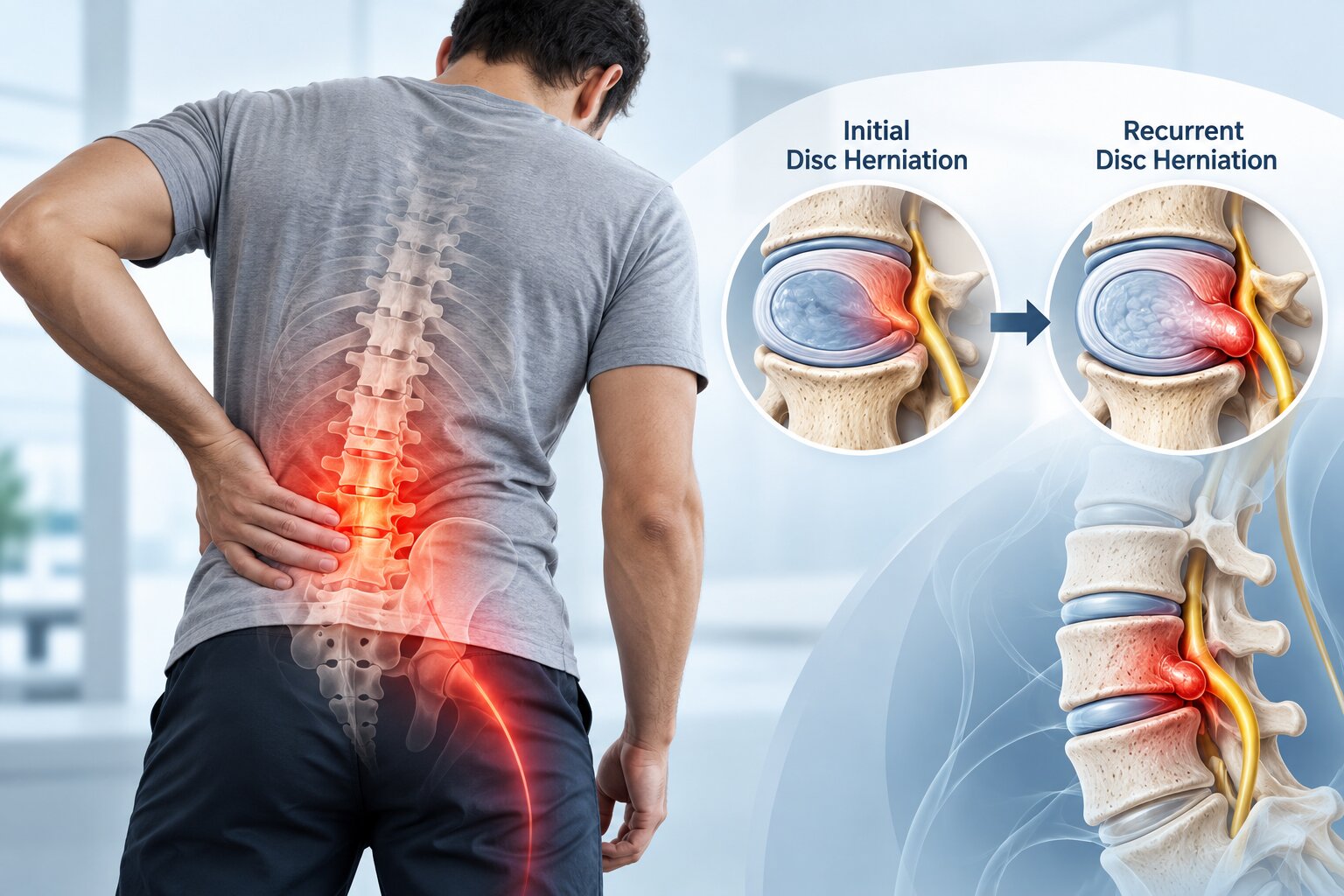
A lumbar herniated disc may recur in some patients after treatment. This condition is known as recurrent lumbar disc herniation. It may be considered especially when a patient who has previously undergone treatment or surgery for a herniated disc experiences a return of lower back or leg pain after a period of improvement.
Recurrence does not occur in the same way in every patient. The symptoms, severity of nerve compression and appropriate treatment approach may vary from person to person.
What Is Recurrent Lumbar Disc Herniation?
Recurrent lumbar disc herniation refers to the reappearance of herniated disc material at a spinal level that has previously been treated, potentially causing renewed pressure on nearby nerve structures.
In patients who have undergone surgery, symptoms may improve significantly or disappear for a period of time before similar complaints return. However, not every new episode of lower back or leg pain means that the disc has herniated again. Other spinal conditions can cause similar symptoms, which is why a medical evaluation is important.
Why Can a Herniated Disc Recur?
Several factors may contribute to recurrent disc herniation. Degenerative changes within the disc, repeated mechanical stress on the spine and individual anatomical factors may all play a role.
Heavy lifting, sudden movements, repetitive strain and prolonged poor posture may also place additional stress on the lumbar spine. In some cases, however, recurrence may develop without a clearly identifiable triggering movement.
Age-related changes in the intervertebral discs may also affect their strength and flexibility over time.
What Are the Symptoms of Recurrent Disc Herniation?
The symptoms of recurrent lumbar disc herniation can be similar to those experienced during the initial episode. Common symptoms may include:
- Lower back pain
- Pain radiating into the buttock or leg
- Numbness or tingling in the leg or foot
- Reduced mobility
- Pain that increases with prolonged sitting or standing
- Weakness in the affected leg
The type and severity of symptoms depend on the location of the herniation and the degree of nerve compression.
How Is Recurrent Disc Herniation Diagnosed?
Diagnosis begins with a detailed assessment of the patient's symptoms and medical history. The physician may evaluate muscle strength, reflexes, sensation and the distribution of pain.
When necessary, magnetic resonance imaging (MRI) may be used to examine the discs, nerve roots and surrounding structures. In patients who have previously undergone lumbar spine surgery, imaging findings are interpreted together with the physical examination to distinguish recurrent disc herniation from postoperative changes or other spinal problems.
How Is Recurrent Lumbar Disc Herniation Treated?
Treatment depends on the severity of symptoms, the degree of nerve compression and the patient's overall condition. Recurrent disc herniation does not always require another operation.
In some patients, non-surgical treatment options may be considered. These can include medication prescribed by a physician, physical therapy, rehabilitation, appropriate exercise programs and adjustments to daily activities.
The aim is to reduce symptoms, support spinal function and improve the patient's ability to perform daily activities.
When Is Surgery Considered for Recurrent Disc Herniation?
Surgical treatment may be considered when symptoms persist despite conservative treatment, when significant nerve compression is present or when neurological findings such as progressive muscle weakness develop.
The type of surgery depends on the patient's spinal anatomy, the location of the recurrent herniation, previous procedures and whether other spinal conditions are present.
Not every patient with recurrent disc herniation requires the same surgical approach. Treatment should therefore be planned individually following a detailed clinical and radiological evaluation.
Can Recurrent Disc Herniation Be Prevented?
It may not be possible to completely eliminate the risk of recurrence. However, certain habits can help support spinal health after treatment.
Following the exercise program recommended by the physician or physiotherapist, using proper lifting techniques, avoiding unnecessary strain on the lower back and maintaining appropriate sitting and working positions may help reduce mechanical stress on the lumbar spine.
Patients who have undergone surgery should follow the activity and rehabilitation recommendations provided by their healthcare team during the recovery period.
When Should You See a Doctor?
A medical evaluation is recommended if lower back or leg pain returns after previous treatment for a herniated disc, particularly if the symptoms continue to worsen.
Increasing numbness, tingling or weakness in the leg should also be assessed. New loss of bladder or bowel control, numbness around the groin or saddle area, or rapidly worsening leg weakness requires urgent medical attention.
Conclusion
A herniated disc can recur after treatment, a condition referred to as recurrent lumbar disc herniation. However, recurrent lower back or leg pain does not always mean that a new herniation has occurred.
An accurate diagnosis requires consideration of the patient's symptoms, physical examination findings and, when necessary, imaging studies. Treatment may range from non-surgical approaches to surgical intervention depending on the severity of symptoms and nerve involvement.